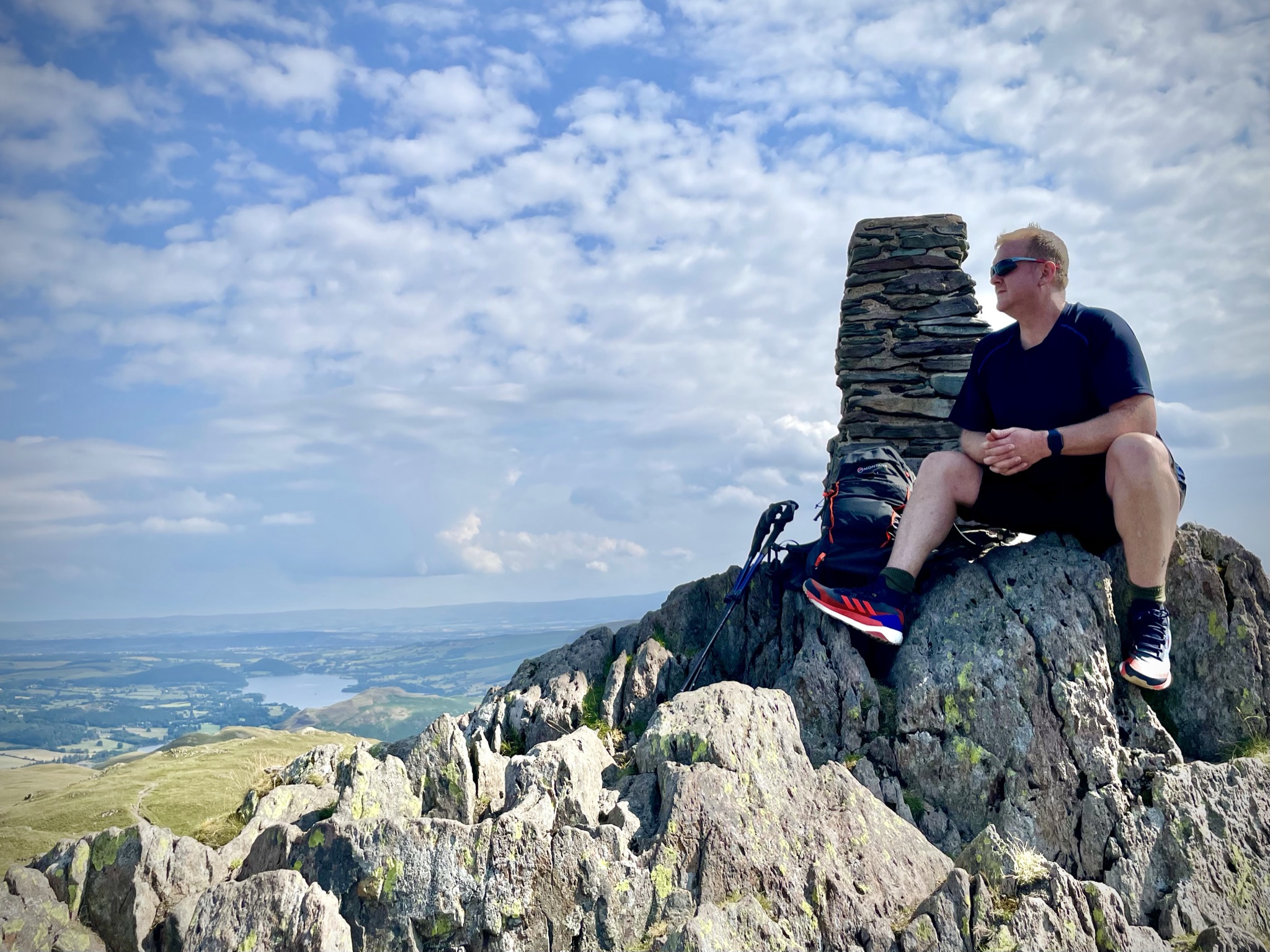
Mental health isn’t a thing, it’s a relationship
One of the biggest challenges facing mental health right now is how we understand it.
Mental health does not just live inside your head. It is your ongoing relationship with the world around you: your work, your relationships, your environment, your expectations, your sense of meaning, and your freedom to move and respond.
When that relationship becomes rigid, pressured, and performance-driven, distress is a reasonable outcome. It’s not a disorder. It’s a signal.
This idea is not new. Existential thinkers have been saying it for decades. Martin Heidegger talked about how modern life pulls us into “the They”, endless busyness, social expectation, and doing without being. Jean-Paul Sartre warned that we suffer when we live in bad faith, disconnected from choice and authenticity. Irvin Yalom framed anxiety not as pathology, but as a response to freedom, isolation, and meaning.
None of them would be surprised by today’s mental health crisis. They would see it as a natural reaction to a world that asks us to “do” without ever letting us “be.”
The problem with “exercise is good for mental health”
We often hear that exercise is the cure, now let’s talk about trail running, or cold water swimming, hiking, or whatever the current wellbeing trend happens to be.
You will often hear: “This is great for mental health.”
Sometimes that is true. Sometimes it is nonsense.
For one person, trail running feels like freedom. For another, it feels terrifying. For someone else, it feels like yet another thing they are failing at.
So no, the activity itself is not the magic.
What actually matters is play.
Play is the missing ingredient
Play is movement without pressure. Challenge without judgement. Effort without a scorecard.
When something feels playful, the nervous system responds differently. Stress hormones rise briefly and then fall. Attention shifts out of overthinking and into the body. The mind stops asking, “Am I doing this right?” and starts asking nothing at all.
That is not fluff. That is biology and psychology doing their thing.
Play is also one of the few adult experiences where identity loosens. You are not your job title. Not your diagnosis. Not your productivity. You are just a human moving through the world.
That shift is the very thing that regulates our nervous system.
Adventure isn’t about danger, it’s about aliveness
Adventure gets a bad reputation. People hear it and think extremes, risk, macho nonsense.
In reality, adventure is simply voluntary uncertainty. Doing something where the outcome is not entirely predictable, but the stakes are safe enough.
From a biological point of view, this is gold. It teaches the nervous system that challenge does not equal threat. Stress can rise and resolve. Fear does not have to take over.
From a psychological point of view, it restores agency. You choose to step forward. You adjust. You adapt.
This sits neatly alongside the work of Rollo May, who argued that mental health requires courage. Not bravado, but the willingness to meet life as it is. It also overlaps with Albert Camus, who believed that vitality and rebellion against numbness were healthier responses to the absurd than despair ever could be.
Adventure does not fix life. It reminds you that you are alive inside it.
The 3A’s: Acknowledgment, Acceptance, Adaptation
This is where my own thinking has landed over time.
Real change, whether biological, psychological, or existential, tends to follow three stages.
- Acknowledgment: This is where I am. Not where I should be. Not where I used to be. This is the honest starting point. Adventure forces this gently but firmly. Your body tells the truth. The terrain does not care about your excuses.
- Acceptance: This is how it feels, and I do not have to fight that. Play changes the tone here. Discomfort is allowed. Imperfection is expected. You can feel anxious, tired, or unsure without that meaning something is wrong with you. This is where the nervous system settles.
- Adaptation: Now I can move. Not because I have been told to. Not because I “should”. But because something in me has space to respond again. This is where learning happens. Where flexibility returns. Where confidence grows naturally rather than being forced.
Finding your “Nature”
We often hear that nature is the answer, but let’s be honest: for some, the great outdoors feels exposed or intimidating.
The goal isn’t to force yourself into a forest if that feels unsafe. The goal is to find an environment that is less demanding. Whether that’s a quiet walk along the Wear, a messy hobby in a garage, or a local gallery, the key is to find a space where your “thinking brain” can quieten and your body can take the lead.
Adventure: The Edge of Chaos
If play is the “how,” adventure is the “where.”
Adventure isn’t about reckless risk or “macho” extremes. It is simply voluntary uncertainty. It’s doing something where the outcome isn’t entirely predictable, but the stakes are safe.
Jordan Peterson argues that growth happens at the “edge of chaos,” the space between what we know and what we don’t. He’s right that responsibility and challenge give life meaning. But I believe that challenge without play becomes crushing pressure and pressure is exactly what we have too much of.
Play is what makes challenge tolerable where adventure is what makes responsibility feel alive rather than heavy. It teaches your biology that challenge doesn’t always equal threat.
Purpose without pressure
This also connects with Simon Sinek, who talks about purpose and the “why”. Purpose matters, but purpose without play quickly turns into another performance.
Sometimes the most psychologically healthy thing you can do is something with no purpose at all. No output. No improvement. No measurable gain. Just experience. That is not laziness. That is recovery.
Why nature helps, without romanticising it
Nature is not magical. It is just less demanding. Outdoors, your senses engage naturally. Vision stretches. Sound softens. Movement becomes responsive rather than repetitive. The thinking brain quietens. The body takes the lead, and this is why being outdoors often helps before you have consciously “done” anything.
But again, this is not universal. For some people, nature feels unsafe. Which tells us the same rule applies: perceived safety determines benefit, there is no one-size-fits-all intervention. Only better understanding.
So what’s the real issue?
The real mental health crisis is not that people are not exercising enough.
It is that:
- Life has become relentlessly performative
- Worth is tied to productivity
- Rest feels earned rather than necessary
- Play has been labelled childish
- And struggle is increasingly treated as pathology
No wonder people are exhausted.
A more human way forward
Mental health improves when people:
- Feel safe enough to play
- Have permission to disconnect
- Experience challenge without judgement
- Move their bodies without pressure
- And remember they are alive, not broken
Adventure and play are not cures. They are conditions. Conditions where biology settles, psychology softens, and people can adapt again. Not because they have fixed themselves but because they have stopped fighting themselves. And in a world that rarely lets us do that, play might be one of the most radical mental health tools we have left.