

I watched a child the other day in a café, maybe seven or eight years old, sitting motionless with an iPad inches from his face. His family chatted around him. Food came and went. Thirty minutes, maybe more, and he never looked up. Just the flicker of the screen reflected in his eyes and the occasional swipe of his finger.
Now don’t get me wrong, i’m not blasting this or criticising it as there have been many times I’ve sat with Archie while he had his tablet out and he has been so engrossed that he had no idea what was going on around him.
It did get me thinking though about my own childhood. Hours spent in woods building dens that would collapse, climbing trees that probably weren’t safe, getting genuinely lost and having to find the way home. Boredom that stretched so long it eventually cracked open into creativity. Scraped knees, actual risk, the visceral thrill of doing something slightly dangerous and getting away with it. even reminiscing upon all of this has got me quite emotional.
That child will never know adventures or days like that. And something in me grieves for what he’s missing.
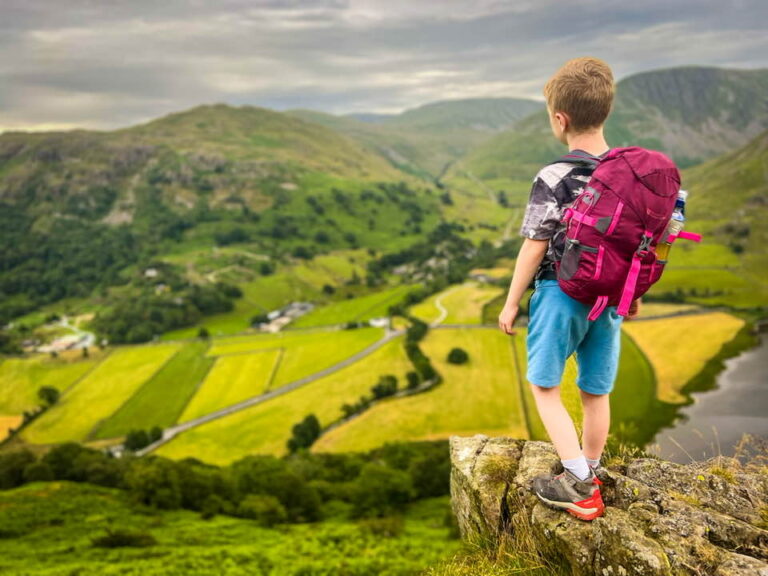
In Parts 1 and 2 of this series, I’ve explored my concerns about the explosion of ADHD self-diagnosis and the research suggesting we’re medicalising responses to increasingly inhuman conditions. But beneath those concerns is something more fundamental: we’re living through a profound impoverishment of human experience, and we’re only beginning to understand what it’s costing us.
The Catalogue of Loss
Let me be specific about what I think we’ve lost, or are losing:
Unstructured play and genuine risk. Children today spend a fraction of the time playing freely outdoors compared to previous generations. Most play is now supervised, structured, and risk-managed to the point of sterility. We’ve eliminated the experiences that teach children to assess risk, handle fear, negotiate with peers, and develop genuine competence through trial and error.
Boredom and the space it creates. We’ve filled every moment with stimulation. Waiting rooms have screens. Car journeys have devices. The moment boredom threatens, we reach for distraction. But boredom isn’t empty time, it’s generative time. It’s where creativity, imagination, and self-initiated activity emerge. Without it, we’re raising humans who can’t tolerate being alone with their own minds.
Connection to nature and the rhythms of the natural world. Most children can identify corporate logos more easily than common plants or birds. We’ve become almost entirely disconnected from seasons, weather, the feel of soil, the smell of rain, the experience of genuine darkness and silence. Richard Louv calls this “nature deficit disorder,” and the research backs him up: time in nature reduces stress, improves attention, supports emotional regulation. It’s not optional. It’s foundational.
Meaningful work and the satisfaction of craft. Most modern work is abstract, fragmented, and disconnected from tangible outcomes. We used to make things, grow things, fix things with our hands. We saw the direct results of our labour. Now we push information around, attend meetings, send emails, and struggle to explain what we actually do all day. That loss of meaning and mastery has profound psychological costs.
Genuine community and face-to-face connection. We’re more “connected” than ever and more lonely than ever. Social media gives the illusion of connection while delivering isolation. We don’t know our neighbours. We don’t gather in public spaces. Extended family is scattered. The dense web of relationships that used to hold people has frayed, and we’re feeling the consequences.
Physical challenge and bodily competence. Most of us spend our days sitting, staring at screens, in climate-controlled environments. We don’t climb, run, carry, build, or use our bodies in the ways they evolved to be used. We’ve become physically incompetent in ways that would have been unthinkable to our grandparents. And our nervous systems, which regulate through movement and physical challenge, are suffering for it.
Silence, solitude, and the capacity for reflection. The world is loud. Constantly. We’re bombarded with noise, stimulation, demands for attention. Genuine quiet, where you can hear your own thoughts, is increasingly rare. And solitude, the kind where you’re truly alone without devices or distractions, is almost extinct. Yet these are the conditions in which humans have always done their deepest thinking and found their sense of meaning.
"Children today are less free than they have ever been, and this lack of freedom is a major reason for the rise in mental disorders."
Peter Gray
The Cost: A Generation Struggling to Function
Peter Gray’s research is damning. Since the 1950s, as children’s free play has declined, rates of anxiety, depression, and feelings of helplessness have increased dramatically. The more we’ve structured and supervised childhood, the more we’ve produced young adults who struggle with independence, decision-making, and resilience.
His argument is simple: play is how children learn to manage their own lives. Through unstructured play, they learn to assess risk, handle conflict, negotiate, create their own goals, and persist through difficulty. When we eliminate play, we eliminate the developmental experiences that build psychological health.
And then we wonder why young people are struggling. We’ve diagnosed them with disorders, offered therapy and medication, but we haven’t asked whether we’ve simply deprived them of the experiences that create wellbeing in the first place.
The same pattern shows up in adult life. Johann Hari’s research on depression found that the strongest predictors weren’t genetic or biochemical. They were social: disconnection from meaningful work, from community, from nature, from values, from a secure future. We’ve built a society that systematically deprives people of what they need, and then medicalised the distress that results.
In Part 2, I wrote about Rat Park and how isolated rats in barren cages became compulsive drug users while rats in enriched environments didn’t. We’re the isolated rats. And instead of questioning the cage, we’re diagnosing the rats.
What Recovery Looks Like
I don’t have easy answers. The forces that created this poverty of experience are enormous: economic systems that demand constant productivity, technologies that monetise attention, urban design that eliminates public space, educational policies that prioritise testing over development. Individual choices alone won’t solve structural problems.
But I do think recovery, both personal and cultural, requires reclaiming some of what we’ve lost.
At the individual level, it means making space for experiences that feel increasingly countercultural: time in nature without devices. Unstructured time where nothing is scheduled and you have to figure out what to do with yourself. Physical challenges that require your body to work hard. Face-to-face time with people you care about. Periods of genuine quiet and solitude. Work that creates something tangible.
For me, as I acknowledged at the end of Part 1, this means taking my own advice seriously. I’ve been ground down by fighting against systems, working with integrity in contexts that don’t reward it, and neglecting my own need for play, adventure, and rest. That’s not sustainable. I need to practise what I preach: make time for the experiences that aren’t productive or goal-oriented but that feed something essential in me.
At the community level, it means creating spaces and structures that support human flourishing rather than treating humans as economic units. That might look like redesigning neighbourhoods to include public gathering spaces. Protecting time for connection and rest rather than treating everything as potential productivity. Pushing back against the colonisation of childhood by screens and structured activities. Recognising that children need to play, and adults need to rest, not because it makes them more productive but because it makes them more human.
At the systemic level, it requires asking much harder questions about how we’ve organised society. Questions about work, about education, about technology, about inequality, about what we value and optimise for. These aren’t questions I can answer alone, but they’re questions we need to be asking rather than continuing to pathologise individuals for struggling in systems that don’t work.
The Challenge: Forward, Not Back
I want to be clear: I’m not romanticising the past. Plenty of what we’ve lost deserved to go. But throwing out everything, including the experiences that make us human, wasn’t wisdom. It was shortsightedness.
We’re not going back to some imagined golden age. We can’t, and probably shouldn’t. But we can go forward to something that better honours human needs. We can design for wellbeing rather than just efficiency. We can create technologies that serve us rather than exploit us. We can build communities that hold people rather than isolate them.
The question isn’t whether modern life can support human flourishing. It’s whether we have the courage to demand it.
Bringing It Together
Over these three blogs, I’ve tried to articulate something I see happening: an explosion of ADHD diagnosis that feels less like medical progress and more like cultural symptom. In Part 1, I shared my experience as a therapist watching clients reach for diagnostic explanations rather than exploring deeper questions. In Part 2, I examined the research suggesting we’re medicalising responses to disordered environments. And here, in Part 3, I’ve tried to name what I think we’ve lost and what it’s costing us.
The through-line is this: we’ve created conditions that make it almost impossible to be human in healthy ways, and then we’ve diagnosed the people who struggle.
Children who can’t sit still in schools designed for compliance get ADHD diagnoses rather than the play, movement, and autonomy they need. Adults who can’t focus in jobs that require constant attention on meaningless tasks get medicated rather than questioning whether the work itself is the problem. People who are anxious and depressed in isolating, unequal, environmentally degraded conditions get therapy rather than community, meaning, and connection.
I’m not saying ADHD doesn’t exist. I’m not dismissing the genuine struggles of people who identify with it. What I’m saying is that the explosion we’re seeing now tells us something about the cage, not just the rats.
And if that’s true, then the solution isn’t better diagnosis or better medication. It’s reclaiming the experiences that make us human. Play. Adventure. Risk. Connection. Nature. Meaningful work. Silence. Solitude. Rest.
These aren’t luxuries. They’re necessities. And their absence creates exactly the symptoms we’re so busy diagnosing and treating.
So yes, I’m taking responsibility for my own recovery. For making time for play and adventure even when it feels like I can’t afford it. Because I know, both intellectually and in my body, that I can’t afford not to.
But I’m also asking bigger questions. About what kind of world we’re creating. About what we’ve lost and what it’s costing us. About whether we’re brave enough to demand better, not just for ourselves but for the children growing up in conditions that deprive them of what they need to flourish.
That feels like the work worth doing. Not just in the therapy room, but in how we live, what we demand, and what world we help create.
The cage doesn’t have to be this way. We can choose differently. But first, we have to recognise we’re in one.
This is Part 3 of a three-part series. Part 1 explored my experience as a therapist with the rise of ADHD self-diagnosis. Part 2 examined the research on how systems create symptoms. Together, these essays represent my attempt to make sense of what I’m seeing and to invite others into the conversation.

One Response
A great read Mark. When I ran the Effective Parenting programme I was at pains to point out that kids can’t make decisions if the parents are always two steps behind making sure they are “safe”.
I can’t remember which author was recently saying creativity will die because no one is sitting mindlessly looking out of a car/bus/train/ waiting room window anymore. Good look with your crusade.